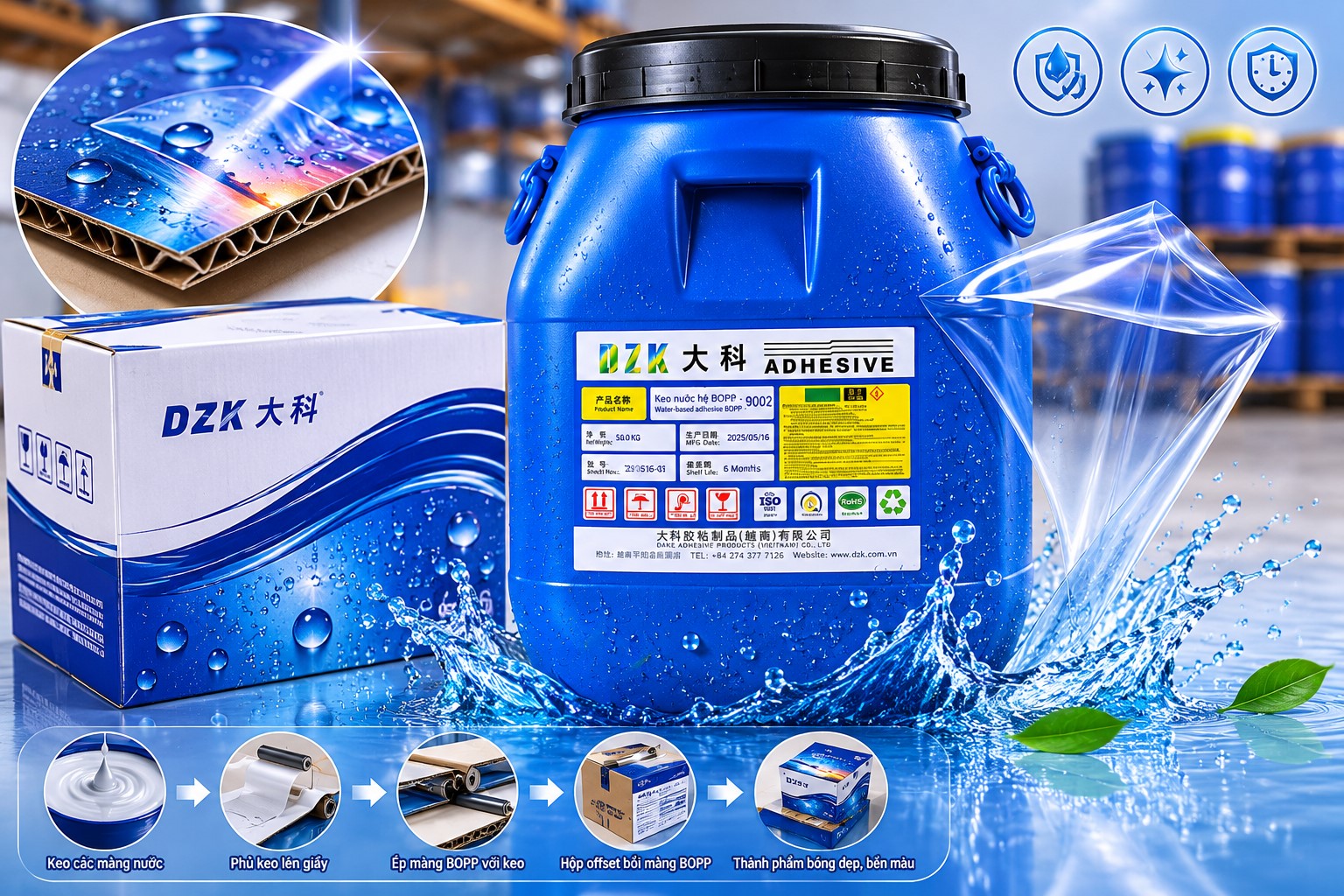
In the post-printing process of the printing and packaging industry, lamination enhances the brightness and water resistance of printed products, providing consumers with a better visual experience. With the continuous emergence of advanced technologies, modern equipment, and innovative adhesives, new development trends have gradually appeared in post-printing lamination.
1. The proportion of water-based lamination is steadily increasing, while solvent-based laminating adhesives are gradually fading out of the market
When lamination technology first emerged domestically, all laminating processes relied on solvent-based adhesives, mainly including single-component SIS oil-based adhesives and two-component polyurethane solvent-based adhesives. However, with the advancement of science and technology, water-based laminating adhesives have gradually matured, and people have become increasingly aware of the hazards caused by solvent-based adhesives:
- A. Harmful to operators: Benzene and ester substances in solvents can penetrate through the skin into body fluids and eventually enter the bloodstream. Long-term and high-volume exposure may cause excessive accumulation in the body, leading to various health problems.
- B. Flammable and explosive: These products pose a high safety risk, and many major accidents and losses caused by them have been reported domestically.
- C. High production cost.
- D. Increased VOC emissions, causing environmental pollution.
- E. Solvent residues may remain in finished products for a long time, posing risks to end users.
- Water-based laminating adhesives have successfully overcome the disadvantages mentioned above.
2. With the continuous improvement of water-based laminating adhesive production technology, cost performance and special properties have become increasingly prominent
2.1 VAE-based water-based laminating adhesives
- The earliest widely used water-based laminating adhesives were VAE-type adhesives. These products feature high gloss, strong powder-covering capability, and excellent operational performance. However, they also have disadvantages such as high cost, relatively weak bonding strength, and poor low-temperature resistance.
2.2 Acrylic polymer emulsion laminating adhesives
- The successful development and continuous improvement of acrylic polymer emulsions in laminating adhesives have ushered in a new era for the large-scale promotion of water-based laminating adhesives.
- Acrylic-based laminating adhesives offer strong bonding strength, high cost-effectiveness, and excellent adaptability, successfully overcoming the shortcomings of VAE-based water-based adhesives.
3. Water-based dry lamination is gaining strong momentum
- As water-based dry laminating adhesives continue to mature and improve, more and more manufacturers prefer using water-based dry lamination processes.
- Although cold lamination machines require less space, consume less electricity, and are easier to operate, the laminated products generally have lower stiffness and poor compatibility with gold and silver inks, making it difficult to meet the requirements of many high-end products. Therefore, dry lamination is expected to have broader development prospects in the future.
- In addition, water-based dry laminating adhesives can also be successfully applied on traditional solvent-based laminating machines, making an important contribution to the water-based transformation of the entire industry.